
Content Warning: This blogpost features discussion and images related to the Holocaust. Some readers may find this material distressing.
This is the first part in a two part series on the Nuremberg Trials.
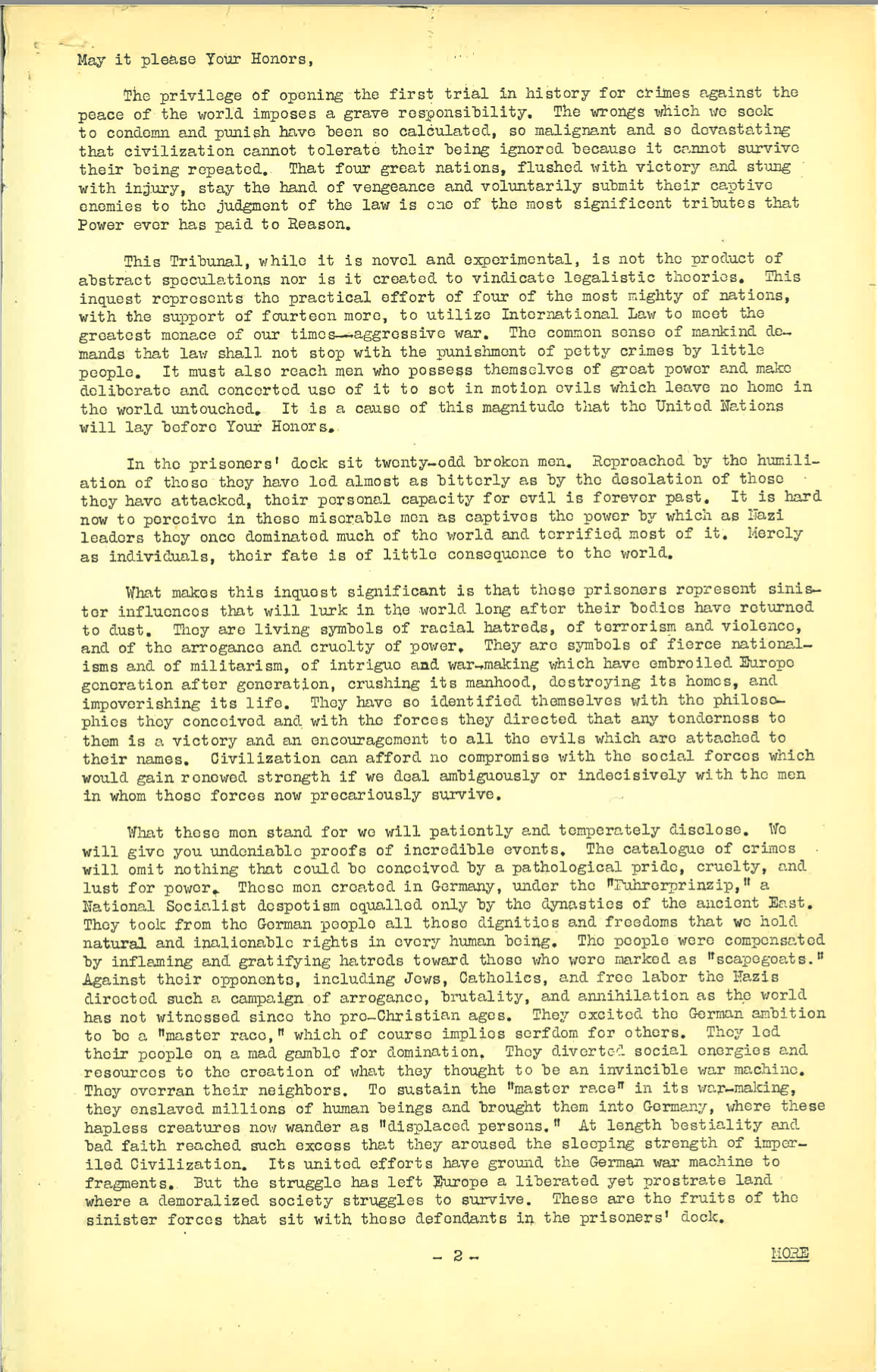
In June 2026, I traveled to Germany and Poland as part of a study abroad program led by Dr. Adam Blackler and Dr. Melissa Hampton for the course Nazi Germany and the Holocaust. Throughout the program, we visited sites that reflected the history of Nazi persecution, resistance to National Socialism, and the pursuit of justice in the aftermath of the Second World War. Among these locations was the Nuremberg Palace of Justice, where, beginning in November 1945, the Allied Powers convened the International Military Tribunal.
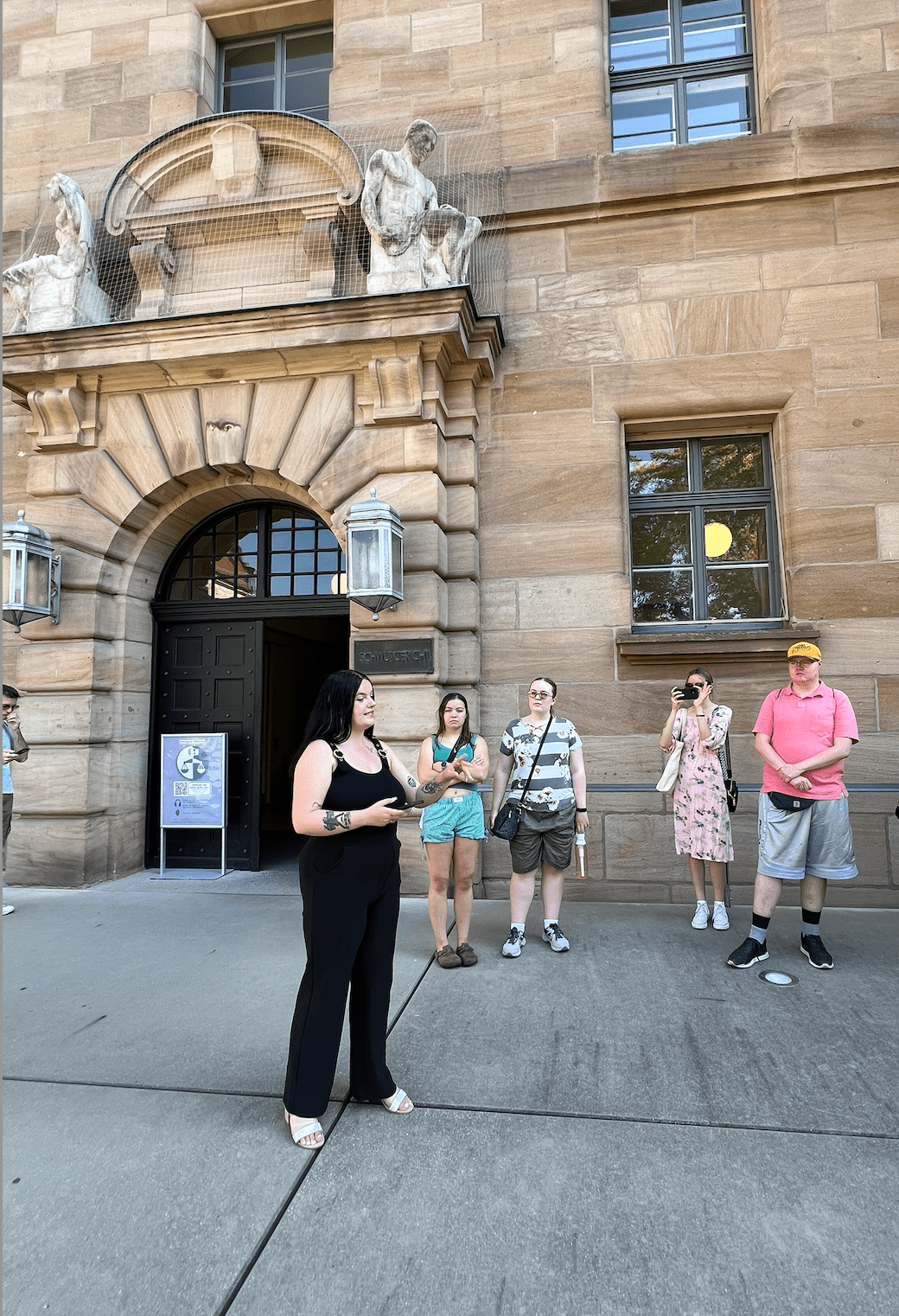
Inside Courtroom 600, the site of the trial proceedings, 24 leading figures of the Third Reich were indicted on charges of crimes against peace, war crimes, crimes against humanity, and conspiracy. The tribunal represented a landmark moment in international law, establishing a new framework for holding individuals accountable for state-sponsored violence and atrocities.
The story of Nuremberg’s legal foundation can be explored through the collections of the American Heritage Center, which houses the papers of Murray C. Bernays. A colonel and lawyer in the United States Army, Bernays played an influential role in developing the legal strategy used to prosecute Nazi leaders and worked alongside Associate Justice Robert H. Jackson, the chief United States prosecutor at the International Military Tribunal. After returning from Germany, I turned to the papers of Colonel Bernays at the American Heritage Center to better understand the legal debates and strategies that shaped the Nuremberg Trials.

When Germany surrendered in May 1945, the unprecedented task of holding the Third Reich accountable loomed before the Allied Powers. The scale of Nazi Germany’s crimes presented a unique challenge. The Nazi regime and its collaborators were responsible for the murder of approximately six million Jews during the Holocaust, as well as millions of other victims, including Soviet civilians, prisoners of war, political opponents, people with disabilities, and religious and sexual minorities. These staggering figures reflected both the actions of Nazi leadership, and the ideological, military, and administrative structures that enabled persecution and mass murder on an unprecedented scale.
The question facing the Allied powers was how to assign responsibility for crimes committed by such an expansive state apparatus. Adolf Hitler, Joseph Goebbels, Heinrich Himmler, and other high-ranking officials responsible for Nazi atrocities had died before they could be held accountable. According to the German Federal Archives, 10 million Germans held membership in the National Socialist German Workers’ Party (NSDAP) at some point between its founding and its collapse in 1945. Many more accommodated, collaborated with, or benefited from the Nazi regime. For some, support for Adolf Hitler’s government was connected to the regime’s claim of restoring national unity and economic stability following the Great Depression. For others, the adaptation meant conforming to life under the dictatorship. However, the extent of the German public’s involvement presented a significant challenge for postwar justice. Legal notes found in Bernays’ papers reveal that Allied lawyers grappled with how to determine which Germans were believers in the National Socialist political project, or just complicit in order to survive under a dictatorship. The denazification process addressed German civilian involvement, but the International Military Tribunal remained focused on high profile defendants.
Widespread Nazi membership, paired with the dangers associated with political opposition, made a comprehensive prosecution of all individuals connected to National Socialism impractical in the International Military Tribunal. Instead, the Allied powers focused their efforts on those who held positions of authority and responsibility within the state. By prosecuting leading military, political, and economic figures, the Allies sought to demonstrate that individuals could be held accountable for crimes committed by the government.
The creation of an international tribunal raised significant legal challenges. Many of the crimes committed by Nazi Germany did not fit within existing categories of international law. Traditional categories of war crimes did not fully address the persecution and murder of European Jews and other targeted civilian populations. Prosecutors therefore developed new legal concepts. “Crimes against humanity” described the murder, enslavement, deportation, and other inhumane acts committed against civilian populations. “War crimes” described violations of the customs of war. “Crimes against peace” were defined as the initiation of aggressive wars. Allied lawyers were concerned that the introduction of the new legal categories could be interpreted as applying laws retroactively, or ex post facto, and thus undermine the legitimacy of the proceedings. The International Military Tribunal required a balance between the need for justice and the necessity of establishing legal proceedings that could create lasting norms and withstand judicial scrutiny.

A fourth charge of “conspiracy” would prove significant. Bernays, working within the U.S. Army’s legal planning efforts, argued that the Nazi regime could not be simply understood as a collective of individuals committing separate crimes, but as a coordinated system whose leaders had participated in a criminal enterprise. Under this approach, prosecutors could argue that individuals who participated in planning of these crimes could be held responsible for crimes committed in furtherance of that plan, even if they had not personally carried out every criminal act. The conspiracy charge offered a way to connect high-ranking Nazi officials to the system of violence created by the regime, rather than requiring prosecutors to prove that each defendant had personally carried out specific atrocities– a hard task, given the administrative structure of the Third Reich.

Bernays also proposed prosecuting Nazi organizations as criminal entities. His plan recognized that the Nazi regime operated through interconnected institutions. This established the collective nature of the Nazi system, while still providing a legal foundation to prosecute individuals who had participated. Although Bernays’s proposal was modified during Allied negotiations, its central ideas influenced the final legal framework of the London Charter, which included conspiracy among the charges brought against the defendants. The final legal framework also retained provisions allowing the tribunal to declare Nazi organizations criminal. The Reich Cabinet, alongside paramilitary, police, and intelligence agencies were considered criminal organizations under this framework. Bernays did not participate in the final International Military Tribunal, though he was awarded the U.S. Legion of Merit for his work on the legal procedure before returning to his law practice in New York in 1945.
Part two in this series will appear on the AHC blog next week.
Post contributed by UW History M.A. candidate and AHC Archives Aide Rhiannon Skye McLean
