In a place like the American Heritage Center (AHC), which houses tens of thousands of historical documents, it can be hard to navigate them and figure out what each collection is. Thankfully, the Center has Jamie Greene, the Manager of Arrangement and Description.
Jamie Greene, Manager of the AHC’s Arrangement and Description Department (Photo courtesy of Carissa Mosness).
“Basically, our job is to rehouse, arrange, describe, catalog, and create finding aids for our collections, and that’s what makes them a little more usable to the researcher,” Greene explains. “So, the catalog record is how patrons find collections in our systems. And then the finding aid is how they navigate the collection and try to locate whatever their research interests are.”
In simple terms, Greene is in charge of arranging and describing collections so that researchers know what’s in them.
And while the process might sound simple, it’s actually much more intricate, as I learned from Jamie. There are two units within the AHC’s Arrangement and Description Department that make collections available: Content Listing and Processing. Those words may not sound exciting, but the results certainly are for researchers and history lovers alike.
Jamie explains, “The Content Listing Unit inventories and makes available newly acquired collection materials, while the Processing Unit arranges and describes collections that have been at the AHC for years.”
As we learned in last week’s post, a set of materials comes in the AHC’s door and Bailey Sparks in the Accessioning Unit does all that’s needed to make sure the materials are legally transferred to the Center and a record is made of their new status as a AHC collection.
From there, the collection goes to Content Listing. This is where Jamie and her assistants come into the picture. Content listing is a fairly new procedure at the AHC, and for archives in general. It means that, instead of waiting potentially years for newly acquired collections to be fully arranged and described (i.e., “processed”), the new collection will get a brief description and inventory – enough to get it in the hands of researchers sooner rather than later.
“The Content Listing Unit inventories new collection material using an archival practice called MPLP (More Product, Less Process),” Jamie describes. “This allows us to rehouse and get just enough descriptive information to quickly catalog and create or edit a finding aid for new collection materials and note if more detailed arrangement and description is required later when resources allow.”
An AHC student intern assisting in content listing a new collection. This process is one way UW students get hands-on training in working with archival materials (AHC photo).
So, what happens when collections get the full treatment and they are processed? “You can think about what’s called ‘processing order,’” Jamie told me. “Either you try to maintain the order that the materials came to you, because usually they can be in some kind of order, or if they’re not in order, your job as a processor is to formulate one. Then a processing plan is made by creating record groups of series and sub-series. Once you’re happy with that, you start creating a catalog record, and that’s what goes into the catalog system we share with the University of Wyoming Libraries.”
Boxes of new material for the Union Pacific Historical Society collection that Jamie Greene is processing. (Photo courtesy of Carissa Mosness)
But one thing makes the AHC’s collections stand out from books and other published materials housed at the UW Libraries. “What makes cataloging archives unique from a library is we also create what’s called a ‘finding aid’ for each collection,” Jamie notes.
From Jamie, I learned that a finding aid is a document that archivists provide to researchers so they can have a description of a collection’s contents and where to locate an item within the collection. Researchers can know box by box what’s in a collection and sometimes even folder by folder if the finding aid is detailed enough. The AHC has collections that can be more than 100 boxes. Can you imagine trying to find something specific if you had to examine even 10 boxes? Thank goodness for finding aids!
This section of the finding aid for the records of the Union Pacific Historical Society shows how each box in the collection is described. On the left, is a table of contents that allows a researcher to go directly to the part of the finding aid most helpful to them (AHC photo).
While describing a collection and creating a finding aid may seem simple and easy, Greene wants people to know that it’s not and, depending on the collection, it can be a time-consuming process.
“It just depends on the size of the collection,” Greene notes. “A collection can be one folder to 1000s of boxes. So, clearly, if it’s one folder, you can probably get it done in four hours to a day. One thousand boxes are going to take a few years. Honestly, it depends on the size and the complexity of the collection.”
The inventory tag from the Union Pacific Historical Society that Jamie Greene is working on. From the numbers on this tag, AHC staff can tell that the collection number is 10713, that the collection arrived on December 9, 2022, and that this particular box is number 354. These numbers remain as a permanent part of the collection’s record at the Center. (Photo courtesy of Carissa Mosness).
During her time at the Center, as an undergrad student employee, a digitization tech and supervisor, a processor, and in her current position as Manager of Arrangement and Description, which she has held the past two and a half years, she has seen a lot of different collections.
“There are ones that stand out because they’re a mixture of what I thought was cool, but they also were difficult. There were difficulties in getting them taken care of on the shelves and processed,” Jamie describes, “I can’t really name a favorite, to be honest. They’ve all kind of blended together.”
That is not to say Jamie doesn’t love her job, because she does.
“I’m working with the collection materials,” she remarks. “I like arrangement and description, the cataloging, and the creating of the finding aids,”
The American Heritage Center (AHC) is home to thousands of different historical materials ranging from letters, diaries, and photos to oral history recordings and original artwork, just to name a few. But how what happens when collections come through the AHC’s door? And how do they get that little number—“Accession Number”—that make them unique? Well, that is all done by the AHC’s Accessions Unit Supervisor, Bailey Sparks.
Bailey Sparks is pictured above in a selfie she took at the AHC. (Photo courtesy of Bailey Sparks)
Bailey is also one of the first people at the AHC to see the new historical materials when they arrive on campus and is responsible for everything from helping to decide which materials the Center will accept to transferring physical and intellectual ownership to the AHC and the legalities associated with that.
“Legal ownership of the material is super, super important,” Sparks explains, adding, “There are documents that sign over the legal ownership of the material to the AHC. Within those documents, donors can say if they have dispositional instructions for them, meaning if the Center was to dispose of the material because it’s not archival, then the donor has a say in where it goes.”
“Most often, if they have any instructions, it’s to return the materials to the donor. They can also retain copyrights if they so choose. So as long as I can keep on top of when things have arrived and keep track of the status of the legal documents that pertain to various materials, then we’re in pretty good shape.”
One of the many filing cabinets where Bailey houses copies of the legal documents. (Photo courtesy of Carissa Mosness)
Back to those mysterious little numbers. I asked Bailey what an “accession number” is. I learned that it’s a sequential number each collection receives that indicates the chronological order of the acquisition. The AHC is now in the 13,000s+ so that’s a lot of acquisitioning going on. She related to me, “If the material is a new collection, then it gets its own totally unique number and a little number at the end that denotes which day it arrived. If something is going into an already existing collection, then it gets assigned that existing collection number and a specific number based on the date that it arrived.” You can think of it like a unique number that a book receives once a library catalogs it. That catalog number is how the library tracks the book and the accession number is how an archive tracks its collections.
Photos bubble-wrapped from shipping await accessioning. (Photo by Carissa Mosness)
Sparks is currently pursuing an undergraduate degree in psychology at UW and hopes to one day obtain her master’s in library science, which led her to her current position, which she started at the end of November in 2022.
“I like the energy at the AHC,” Sparks exclaims, “It vacillates between routine, which I like, but it can also change quite suddenly as well. I mean, there are difficulties with any position, but this job has been really nice because I am able to have somewhat flexible hours.”
A box of newly arrived materials is in a room specially designated as a staging area for incoming collections. (Photo by Carissa Mosness)
Sparks also took time to praise her coworkers at the Center, noting how helpful they have been over the past couple of months.
“People here are quite supportive of me,” Sparks affirms, “If I need some instruction on something, then I have some people that I can go to. And if there’s something that I’ve missed, they can come to me and say, ‘I think that you might have missed something’ and it’s not a big deal, which has been very nice.”
What happens to a collection once Bailey has done her job? That’s next in our series describing what happens inside the Cone on the Range.
Preserving and celebrating diverse narratives is crucial to understanding our shared history and fostering inclusivity in society. In a remarkable collaboration the American Heritage Center at along with playwright and producer Gregory Hinton, have been recognized for exceptional work in LGBTQ+ archival preservation and representation. Recently, we were honored with prestigious awards for initiatives that include the successful Wyoming tour of the play A Sissy in Wyoming and the establishment of the “Out West in the Rockies” LGBTQIA+ archive. Let’s dive into the significance of these accolades and the impact of the work.
A Sissy in Wyoming is a compelling verbatim play that vividly portrays the remarkable life of Larry “Sissy” Goodwin (1946-2020), a Wyoming power plant operator, educator, activist, and crossdresser. He was a regular guy, a man’s man, who just happened to express himself through feminine clothing. He embraced the nickname “Sissy,” reclaiming it as a source of empowerment, taking away the sting of the slur often associated with it. Playwright and producer Gregory Hinton collaborated with AHC archivist Leslie Waggener, who conducted oral interviews with Sissy’s wife, Vickie Jones Goodwin. The play beautifully captures the complexities and triumphs of Sissy’s journey, highlighting his courage and the challenges he faced in a society that often struggles with understanding gender identity and expression.
Vickie and Sissy Goodwin vacationing at Devils Tower National Monument, June 2018.
From September 30 to October 9, 2022, A Sissy in Wyoming embarked on a statewide tour, touching the lives of communities in nine towns across Wyoming. The performances, open to the public for free or nominal charge, provided a platform for audiences to engage with the play’s themes and explore the profound issues it addresses. After each reading, Gregory Hinton and Vickie Goodwin participated in Q&A discussions with the audience, encouraging dialogue and understanding among community members. In addition to the AHC, the tour received generous support from Wyoming Humanities, the Wyoming Cultural Trust Fund, the Wyoming Arts Council, and the Wyoming Historical Society.
Flyer for the Cowboy State tour of A Sissy in Wyoming.
The American Association for State and Local History (AASLH), a national organization that celebrates achievements in historical preservation and interpretation, honored the AHC and Gregory Hinton with the Award of Excellence in the Rapid Response project category. This prestigious accolade recognizes the impact of A Sissy in Wyoming in preserving diverse narratives and promoting inclusivity in historical representation.
Gregory Hinton was also honored with the Diversity Award from the Society of American Archivists (SAA), recognizing his outstanding contributions in advancing diversity within the archival profession and the archival record itself. Hinton’s pivotal role in establishing and developing Out West in the Rockies with the AHC played a significant part in this well-deserved recognition.
Gregory Hinton reading from A Sissy in Wyoming backgrounded by an image of Sissy Goodwin wearing one of his favorite outfits. Central Wyoming College, Riverton, October 7, 2022.
Out West in the Rockies is a regional LGBTQ+ archive co-founded by Gregory Hinton and the AHC in 2015. This archive covers Wyoming and eight surrounding Rocky Mountain states, serving as a vital resource for collecting and preserving the history and culture of the LGBTQ+ community. The program shines a light on the often-underrepresented LGBTQ+ narratives within the American West.
Marquee of the Broadway Theater in Rock Springs. Vickie Goodwin and Gregory Hinton pose before that evening’s reading of the play on October 6, 2022.
The recent awards bestowed upon the American Heritage Center and Gregory Hinton reflect the AHC’s commitment to preserving LGBTQ+ history, promoting inclusivity, and advancing dialogue about important social issues. Through the powerful portrayal of Larry “Sissy” Goodwin’s extraordinary life in A Sissy in Wyoming and the establishment of Out West in the Rockies, we are working to create transformative spaces for understanding.
While doing research in 2013 at the American Heritage Center for the National History Day competition, I came across an amazing discovery.
London Homer-Wambeam
Many History Day students strategically (and wisely) first pick a collection at the AHC and then base their competition topic on it. That year, I had already settled on the topic of the Hindenburg disaster and was not expecting to find any research materials relevant to my topic. After all, there were no significant connections between Wyoming and the disaster, which occurred in New Jersey on May 6, 1937.uch to my surprise, the AHC held a collection of materials from one of the federal investigators who investigated the Hindenburg crash. The investigator, Denis J. Mulligan (1900-1983), had a long career in civilian and military aviation. He served as Chief of the Enforcement Section, Investigator and Legal Advisor of the Bureau of Air Commerce of the U.S. Department of Commerce in 1934 and was its final director until 1939.
The cause of the Hindenburg crash is still unknown – although sabotage, lightning, a puncture, or a fuel leak have all been speculated as the cause. Mulligan had his own idea. He had traveled on the Hindenburg just months before the crash. From this, Mulligan thought that faulty work from making the blimp longer and the mixture of air and hydrogen inside caused the fiery crash.
Mulligan’s papers at the AHC had not yet been fully processed, so discovering actual burnt materials from the crash was an incredibly exciting moment. Did these fragments help me unearth some new perspective on the disaster? No, but discovering something so tangible from an event which occurred nearly a century ago is something few people are lucky enough to experience. It provided me with a personal connection to history that captivated my scattered teenage attention span and inspired a lifelong interest in history.
Singed postcards found at the site of the Hindenburg crash. Box 2, Denis J. Mulligan papers, Collection No. 9121, American Heritage Center, University of Wyoming.
I created a documentary to publicize these Hindenburg documents, which were unknown to Hindenburg researchers previously, but more importantly, to share my love for the AHC and its wealth of resources.
Looking back on it now, it’s clearly the creation of a high school student with the technology I had available at the time, but the message about the AHC’s incredible collections still holds true.
Please note that the documentary incorrectly states that the Hindenburg disaster happened in 1939.
Post contributed by London Homer-Wambeam, June 2023. Additional text about the Denis Mulligan papers added by AHC Simpson Archivist Leslie Waggener.
James “Jim” Watt, the former Interior Secretary, passed away on May 27, 2023, at the age of 85. While his tenure as Interior Secretary during the Reagan administration defined him, his career spanned various roles and contributions. Born and raised in Wyoming, Watt carried a unique perspective on the region that influenced his work.
James Watt during the time he was Secretary of the Interior. He served in the role from January 23, 1981 to November 8, 1983. Box 8, James G. Watt papers, Collection No. 7667, American Heritage Center, University of Wyoming.
Watt’s tenure was marked by controversial moments, including a 1981 House Committee Briefing where he made a casual reference to the Second Coming of Christ while discussing his responsibilities as secretary. Yet, it is important to examine the nuanced role that evangelical and populist rhetoric played in shaping Watt’s political language and policy decisions and how he applied the rhetoric to garner support for his policies. These elements were utilized by Watt to justify an anti-environmental stance, which reflected a notable shift in the landscape of anti-environmentalist politics. Prominently, Watt became a proponent of the “Sagebrush Rebellion,” a Western movement that sought regional control of public resources. While encountering staunch opposition from environmentalists and lawmakers, Watt’s tenure faced challenges, culminating in his resignation in 1983 following a widely condemned joke about minorities.
Watt (far right) seen here with U.S. Senator Milward Simpson from Wyoming and Watt’s wife Leilani, whom he married in 1957. The photo dates to circa 1962. One year after her husband’s resignation as Interior Secretary, Leilani published a book titled Caught in the Conflict: My Life with James Watt (1984) defending her husband and his policies. Box 8, James G. Watt papers, Collection No. 7667, American Heritage Center, University of Wyoming.
James Watt was born in Lusk in 1938 and later moved to Wheatland with his family. Growing up in the West instilled in him a hard-nosed view of the region, marked by firsthand experiences of harsh weather conditions and the importance of water and land. As a native of the West, Watt understood the value of the region and its resources, which would shape his career and approach to policymaking.
During the early stages of his political career, James Watt served under Milward Simpson, a U.S. Senator from Wyoming. In 1962, Watt joined Simpson’s campaign for a Senate seat, taking on the role of an issues person responsible for opposition research, planning, and organization. This experience provided Watt with valuable insights into the world of politics and set the stage for his future endeavors in shaping natural resource policies. Serving under Simpson allowed Watt to gain a deeper understanding of the concerns and aspirations of Westerners, which would influence his later work as a federal power commissioner and Interior Secretary.
Watt seen with other members of the staff of U.S. Senator Milward Simpson, a Wyoming politician who was an early mentor for Watt. Watt is tall man in back. Box 8, James G. Watt papers, Collection No. 7667, American Heritage Center, University of Wyoming.
In 1975, President Gerald R. Ford named him to the Federal Power Commission, where he struggled with routing the ambitious Trans Alaska Pipeline to bring oil from Prudhoe Bay on Alaska’s North Slope to the rest of the country. Soon after, in 1977, he became president of the Mountain States Legal Foundation, a conservative legal advocacy group based in Denver that challenged government regulations through lawsuits and played a significant role in shaping conservative strategies for natural resource management. His extensive knowledge of environmental policy and legal acumen proved invaluable in addressing complex challenges faced by the Foundation and its supporters.
In 1980, Ronald Reagan nominated James Watt as Interior Secretary. Watt’s policies, such as offshore oil and gas leasing and large-scale coal lease auctions, drew widespread criticism. He proposed cuts to land acquisition funding, withdrew strip-mining regulations, and significantly reduced protections under the Endangered Species Act. Watt’s blunt manner, coupled with his controversial policies, strained his relationships with environmentalists, lawmakers from both parties, and eventually even the White House itself.
Watt shown at the 1982 One-Shot Antelope Hunt that has been held annually in Lander, Wyoming, since 1940. The event has been a popular place to be seen among Wyoming politicians. Box 32, James G. Watt papers, Collection No. 7667, American Heritage Center, University of Wyoming.
Throughout his career, Watt faced opposition and scrutiny, exemplified by a two-volume set of negative information compiled by the Wilderness Society known as the “Watt Book,” which is housed in box 17 of Watt’s papers at the AHC. Yet, it was Watt’s own words that led to his resignation from the Reagan administration. During a 1983 public speech regarding his coal-leasing policies he noted that the panel reviewing those policies included “every kind of mixture—I have a Black. I have a woman, two Jews and a cripple.” The remark created immediate backlash from Congress and the public, prompting his departure as Interior Secretary on November 8, 1983.
Letter from President Ronald Reagan reluctantly accepting Watt’s resignation. Box 10, James G. Watt papers, Collection No. 7667, American Heritage Center, University of Wyoming.
Nevertheless, James Watt’s impact as a lightning rod for the Reagan administration’s policies cannot be denied. Although he faced criticism, Watt remained steadfast in his conservative beliefs and loyalty to the mission of supporting energy development on federal lands. Watt’s controversial legacy continues to resonate, and his life’s work serves as a reminder of the ongoing debate over natural resource management and the balance between conservation and development.
For those interested in delving deeper into the life and legacy of James Watt, his papers are available for research at the American Heritage Center. The Center’s collections include a comprehensive oral history interview conducted with Watt in 2003 as part of the Milward L. Simpson Family Oral History Project. These invaluable archival materials offer insights into his career, controversies, and the complexities of his time as Interior Secretary. Researchers and historians can explore the rich collection to gain a comprehensive understanding of Watt’s contributions and the political climate in which he operated.
Post contributed by AHC Simpson Archivist Leslie Waggener.
In the United States, the generation born post-Depression, or about 1939 to the end of World War II in August 1945 have been named “War Babies.” The Baby Boomer generation soon followed, beginning in 1946, and has been credited with contributing significant societal changes, usually without acknowledgement that their forebearers – the War Babies – led the way.
By the time War Babies became young adults in the early ‘60s, major cultural changes were occurring. Women coming of age in the early- and mid-1960s were school children in the late 1940s and throughout the 1950s—a period of relative stability on the home front. Then, as noted by Gail Collins in her 2009 book When Everything Changed: The Amazing Journey of American Women from 1960 to the Present, major societal transformations occurred—from the availability of birth control pills and other new methods of contraception; career choices expanding beyond being nurses, teachers, and secretaries; the passage of Title IX legislation on June 25, 1972, which allowed and promoted girls’ participation in organized sports; to increased frequency of divorce. Expectations girls held about prospects for their adult lives collided with changed realities for many young women.
So, what were the experiences of Wyoming women who were born War Babies? That’s a question Dr. Susan McKay sought to answer. Dr. McKay is Professor Emerita of the University of Wyoming Gender & Women’s Studies Program. For more than two decades, she taught and researched issues focused on women, girls, and armed conflict; women and peacebuilding; and feminist issues in peace psychology. Her books include Where Are the Girls? Girls in Fighting Forces in Northern Uganda, Sierra Leone, and Mozambique, Their Lives During and After War (2004); Raising Women’s Voices for Peacebuilding: Vision, Impact, and Limitations of Media Technologies (2001); and Women and Peacebuilding (1999).
Dr. Susan McKay, 2021. Photo by Sharon McKay.
Throughout her career, Dr. McKay employed oral history methodology to provide authentic voices to her research and publications. Based on her knowledge as a psychologist with experience conducting in-person interviewing, she decided that this method would best help her delve into the experiences of Wyoming women who were War Babies. The project was conducted with a cross-section of women born between 1939 and 1946 who lived in Wyoming all or most of their lives. The influence of living in Wyoming upon their choices and the changes experienced were a particular focus.
The interviews explored whether the expectations that girls held for their adult lives collided with changed realities for women. In Wyoming the changes tended to be more incremental due to the relative isolation associated with the state’s predominantly rural and semi-rural demographics. Many of the women interviewed experienced childhoods during which they were given a lot of responsibility and freedom to roam. Also, ranching and farming traditions of self-sufficiency and independence for both men and women may have blunted the sense among some women of a pressing need for self-autonomy compared to elsewhere in the country.
Donna Ruffing, who grew up on a ranch, remembers bringing in the cows at age 5, raising a fawn at age 8, and raising her own flock of 25 sheep at age 9. “My dad took me to the bank and co-signed a note,” she said. “I had [the sheep] until I was between my junior and senior year in high school. I made a lot of money. I had champion livestock.” At times her parents worked at other jobs, and she and her brother took on a lot of independent responsibility on the ranch. “My brother and I were expected to go to the hayfield in the summertime. He would mow, and I would ride the dump-rake…. Then when my dad came home from work, he wanted to bale what we had done that day. So, when he came to the field, Bob and I would go home and milk the cow and feed the pigs and gather the eggs, because mom came home later than that. And I started supper.”
Donna Ruffing, 2018. Photo by Susan McKay.
Frances Audier, who moved from France to Wyoming at age 7, recalls, “The freedom, the kind of wild places and the freedom that a girl would have in Wyoming, was a huge contrast to the very restricted, very controlled environment in France. And the fact that as a seven- and eight-year-old and from then on, every summer of my life, that I could climb anything, go anywhere, be responsible for herding cattle, it was absolutely remarkable. It was as if the world had opened up. And that, as a female, I think it made me feel that I could pretty much do whatever I wanted.”
Frances Audier, 2021. Photo by Susan McKay.
Nonetheless, many women talked about what it was like to come of age in a world in which choices for women were curtailed. Connie Owen dropped out of college to get married at 19, and when the second of the two children she had with her husband was 8 months old, he told her he was leaving her. She quickly found out that as a woman without a husband, no one would issue her a credit card. In the early 1970s, she found that because she was a woman alone, no bank would loan her the $8,000 she needed for a mortgage, even though by then she had $25,000 in equity to bring to the table.
Connie Owen, 2017. Photo by Susan McKay.
No matter what their true passions and interests, women often felt that they were expected to choose within a narrow range of possible careers. Frances Audier reflects, “I was limited by the notion that women could be nurses, teachers, airline hostess, secretary. It never occurred to me to look beyond that until later.” Kathy Karpan remembered that “You had two choices. You either became a wife and a mother or you pursued a career. And you did not, in those days, sleep around. And you did not think that you could marry somebody who would support, entirely, your choice of having a full-time career. I mean, you didn’t. And if you don’t think there’s a difference, just look at the difference between my situation and Hillary and Bill Clinton. And they’re only four years behind me. I’m telling you, it accelerated each year.”
Kathy Karpan, 2019. Photo by Susan McKay.
Many women, however, went beyond those expectations—some through the independence and rigors of ranching and farming life, others by becoming, for example, academics, politicians, or businesswomen at a time when this was not the norm.
Frances Audier, mentioned above, went on to own a sporting goods store, become an actress and an accountant, and in later life relished being a vision consultant helping those experiencing low vision to access resources to allow for more independent living.
Irene Devin, who did choose to be educated as a nurse, progressed from teaching nursing to working to promote family planning services, serving as a member and chair of Laramie’s hospital board, starting the national Rural Healthcare Coalition, and finally, serving for four years in the Wyoming House of Representatives and eight years in the Wyoming Senate.
Irene Devin, 2018. Photo by Susan McKay.
Barb Niner found herself doing unusual work for a woman of her generation: “After I was married, I became a certified weighmaster. I weighed all the cattle as they came through the sale ring. Cattle are sold by the pound, and so that was quite a responsibility…. And of course, I had to be certified by the state to do that.”
Barb Niner, 2018. Photo by Susan McKay.
Other women interviewed became college professors, politicians, horse trainers, building contractors, hospital administrators, and journalists. One became a poet, while simultaneously running a ranch. Kathy Karpan, quoted above, served as Wyoming Secretary of State, the head of the Department of Health and Social Services, the national Office of Surface Mining, and ran for both U.S. Senate and Wyoming Governor.
In similarly non-gender-conforming style, Barbara Ross didn’t finish high school, married at 17, and worked on oil rigs with her husband. “I was probably one of the first women that ever worked on the rigs. And I loved it,” she remembers.
As Barbara Ross said, “The women in Wyoming—most of them—work damn hard all their life at something.”
Barbara Ross, 2021. Photo by Susan McKay.
Overall, many of the women who became professionals started on those careers later than is now typical for women, but, although they may have gotten a late start, the vast majority of the women interviewed led accomplished lives whether professionally or as involved members of their communities, something Connie Coca’s life illustrates so well. She dreamed of becoming a nurse, but when she was young the $50 tuition was more than she could afford. Later, after she married and had a child, she tried enrolling in a nursing program, but had to drop out after only 6 months due to the cost of and unreliability of babysitters. And yet, after her two daughters were grown, she went to college, earned an undergraduate degree, and went on to get a master’s degree, both degrees in social work. In addition to working for many years in that field, and despite her late career start, she also taught Chicano Studies at the University of Wyoming.
Connie Coca, 2020. Photo by Susan McKay.
By the late 1960s and into the 1970s, feminist ideas were sweeping the nation, such as broader career possibilities, as was resistance against rigid gender roles and lack of independence for women. The interviews delve into the interviewees’ thoughts about all of these changes, and one of the themes that emerged is that although these changes often became an important part of younger generations’ worldviews, many of the women in the age group that was interviewed for this collection already were so enmeshed in childrearing and hard work that they didn’t feel they had time to think much about such cultural changes. Gail Aldred voiced this issue, which was also echoed by other women. When asked if she identified with feminism or had been involved in the feminist movement, she said, “No, we were busy with the kids.” In part, these feelings arose from the early parenthood that followed the early marriages (late teens to very early 20s) that were the norm for this generation. On the other hand, many of the women spoke with pride about their daughters’ (and sons’) independence and professional achievements.
Gail Aldred, 2018. Photo by Susan McKay.
When asked about feminism and its meaning to them personally, women expressed a range of responses including disgust at “bra burners”; strong statements that if women want to be “equal,” they should prove that they were by taking on the responsibilities of a man; and mistaking “feminist” for “feminine,” that is, wanting to be treated by men as “feminine.” Many women were adamant that Wyoming is the “equality state” and women should be treated as equal. Women, even those who did not identify with feminism, per se, expressed support for the idea that women should receive equal pay for equal work.
Often women struggled to define feminism and its meaning to them. Rancher Patricia Frolander explained, “It’s hard for me to define feminism. I like being a woman. I used to be able to pick up a 50-pound feed sack, but I always loved it when my husband said, ‘Let me go ahead and stack those for you.’ I could pick them up and feed them. He knew that. But it wasn’t an issue for us. On the other hand, when he came in at night, I never expected him to do the dishes, and we might have both been out all day. I prepared the meal; I did the dishes. It was a quid pro quo.”
Pat Frolander, 2021. Photo by Susan McKay.
Divorce was becoming more common in the 1970s and thereafter—it occurred in 31% of the cohort interviewed (17 of 54 women). Eleanor Stepp Johnston indicated that divorce was far more common in rural Wyoming than may be realized. “Oh, honey, that was very common then,” said Johnston in her interview, continuing, “There were so many divorced people…in Big Piney, Kemmerer. Yes. There were a lot of divorces.” When asked if she felt different in her small community of La Barge after her divorce, she replied, “I didn’t feel different. I liked not being married. I liked not being abused. I liked not being kept down all the time…. Yeah, I liked it. I liked not being married…”
Eleanor Stepp Johnston, 2021. Photo by Susan McKay.
Other women who were divorced commented on the difficulties of supporting a family during this era of relatively limited job-opportunities for women. Kayne Pyatt discussed having to get married at a young age because of pregnancy. Finally, after ten years of marriage, when she and her husband were living in Phoenix, she found out that her he was having an affair with her best friend. “I just said, ‘That’s it. I’m done.’ And so, I came back to Evanston. And my mom and my stepfather helped me get a place. And I got a job at the Wyoming State Hospital. I worked many, many jobs…. Worked in restaurants, worked in bars. I did everything I could…. And I was on welfare…. That was probably some of the hardest times in my life, was being on welfare, because people look down on you, they snub you in the grocery stores when they’re checking you out. In fact, I even sent my kids one time to get groceries with food stamps, and they came home crying because the clerk was so rude to them. So, I never sent them again.”
Kayne Pyatt, 2020. Photo courtesy of Kayne Pyatt.
In terms of living in Wyoming, many women mentioned the positives of the less frenetic lifestyle in Wyoming compared to some other parts of the country, the feeling that in such a small state there is a heightened sense of community, the pleasures of the beauty of the Wyoming landscape, and the positive health effects of outdoor activities that that landscape enabled.
Dolores Haslam, who has lived in Crowheart all her life, talked about her love of living in Wyoming. “[I] appreciate what we have here: the fresh air, being able to look out and not see skyscrapers, and to be able to see the clouds and blue sky…. I just have no desire to move, to leave here, and move into a big city or even a little town. I just like the fresh air and the wide-open spaces.”
Dolores Haslam, 2019. Photo by Susan McKay.
Joyce Diedtrich commented on the community aspect of life in Wyoming: “I like the practicality of Wyoming people. I like the fact that there is such a history here of us being self-sufficient; of us being open-handed with our neighbors because you needed their support often and they needed yours, just to make life good.”
Joyce Diedtrich, 2019. Photo by Susan McKay.
Also notable was a difference between those who were born in Wyoming and those who came to the state as young adults—born-to-Wyoming women grew up with the above feelings about the state as a sort of birthright, while for transplants, especially those who came from more urban environments, there often was a period of culture shock as they adapted to this rural state.
In general, the interviews give voice to a wide range of women who grew up and began their adulthood during a time of great change as they look back on their lives from the vantage point of their 70s and 80s. And, in spite of many challenges, the vast majority of them expressed a great deal of satisfaction with how their lives turned out.
You can find out more about this fascinating project in the Wyoming Women’s History: Choices and Changes Oral History Project, 2017-2022. The collection contains audio oral history interviews, transcripts, photographs of the participants, a map indicating interview locations, and project documentation. Contact the AHC’s Reference Department at ahcref@uwyo.edu or 307-766-3756 to access the materials.
If you are interested in learning more about the experiences of both Wyoming women and men who were born War Babies, you might want to check out the collection of oral histories from the Class of 1960, who were born during World War II and grew up in Worland, Wyoming. The collection, titled “The War Babies of Worland”, is available at the Washakie Museum and Cultural Center in Worland. The collection features interviews with 20 classmates who share their memories of life in Worland in the 1940s and 1950s, when the town was booming with oil and sugar beet industries, and when they witnessed the arrival of television, rock and roll, and the Cold War. The collection also includes photographs, yearbooks, and other memorabilia from the Class of 1960. The collection is a valuable resource for anyone who wants to explore the history and culture of Wyoming from the perspective of a generation that lived through significant changes and challenges.
Post contributed by Leslie Waggener with significant contributions from Dr. Susan McKay and Susan Becker.
A huge thanks goes to Susan Becker, a longtime expert in oral history methodology, for participating in the conceptualization of the project and transcribing 54 interviews contained in this collection. Susan was the program manager for the Boulder Public Library Maria Rogers Oral History Program in Boulder, Colorado, from 1998 to 2014.
Documents and photographs found in the American Heritage Center’s collections can be used to explore the ways in which railways have been and are perceived in American society. Examples of these are in an AHC virtual exhibit titled “The Art of the Railroad.”
Items in the exhibit illustrate how these perceptions have become woven into the fabric of our lives. An illustration of this was when Union Pacific’s Big Boy rolled through Wyoming towns in 2019, bringing with it the marvel and widespread nostalgic appeal of a historic steam engine. Crowds of train watchers gathered at depot platforms, railroad crossings, and along the railway.
The Union Pacific #4014 Big Boy on display at the Laramie, Wyoming, historic railroad depot during the 2019 inaugural run of the recently rebuilt steam engine. Photo by Gary Gray, July 9, 2019.
The Romance of the Railways
Thomas Hart Benton, undated. Box 278, Howard F. Greene Collection, Collection No. 2123, American Heritage Center.
The story of railways is central to telling the story of the development of the American West. Thomas Hart Benton (1782-1858) was a vocal supporter of westward expansion. He advocated for the building of a central railroad line across the continent. In an 1849 speech delivered at the National Railroad Convention in St. Louis, he painted a picture of the railroad as a “conveyance being invented which annihilates both time and space…putting Europe and Asia into communication, and that to our advantage, through the heart of our own country.”
Post card labeled, “Driving the Golden Spike,” undated. Box 278, Howard F. Greene Collection, Collection No. 2123, American Heritage Center.
The Pacific Railroad Act of 1862 was the culmination of Benton’s and others’ efforts. Out of this, the transcontinental railroad was built and, along with it, an industry that exploited its legendary role in American westward expansion. With the marriage of the Central Pacific and Union Pacific at Promontory Summit in Utah on May 10, 1869, the railroad began a campaign to bring “civilization” west.
Guidebooks were marketed to the American public encouraging the exploration and settlement of newly opened territory. Williams Pacific Tourist and Guide Across the Continent dating to 1877 (depicted below) was “Officially Endorsed by the Pacific R. R. Companies.” It described destination points along the railway route which detailed stories that contributed to the romance and mystique of the American West. Advertisements in the back of the Guide, sponsored by railways, promoted land sales and settlement in the West.
Alice’s Adventures in the New Wonderland was an 1885 brochure that targeted Yellowstone National Park as a destination for tourists. A colorful, illustrated map lured tourists to travel the railroad to exotic places that were once a part of fanciful tales. The brochure can be found in the Fitzhugh Collection of the American Heritage Center’s Toppan Rare Books Library.
The realities of the pitfalls of railway travel, however, were not often included in the guidebooks. Train derailments were common and machine v. nature oftentimes saw nature getting the upper hand. In a letter to the New York Groten Journal, February 26, 1872, Edmund E. Robinson, an agent for the Union Pacific Railroad at Lookout Station in Albany County, Wyoming, recounted a particularly severe snowstorm that grounded engines for days. Robinson noted that it was “one which will be remembered for years to come, on account of its severity and long duration…The snow was flying and drifting into the cuts so fast that it was hard work for the three engines to work their way back to Lookout…One man could not keep standing room for himself on the track by shoveling, the snow drifting faster into the cut than it could be shoveled out.”
These problems continued into the 20th century as shown in the two images below from the infamous blizzard that hit Wyoming in 1949. Pictured are an engine stuck in snow drifts and a rotary plow clearing the tracks amid towering snowbanks.
On his way to join a Hayden expedition in 1872, Sidford F. Hamp, wrote of having to detrain because the “railway had been washed away and the bridge broken, so we had to walk over the broken bridge by moonlight which was rather difficult because the bridge was made…with a plank down the middle and if you missed your footing you would have dropped through into the river.”
The issues of travel, however, improved with technology. Into the 20th century the romance and lure of the railroad drew people on board. The railroad marketed its own excursions. On one of those was Ed and Mary Reithmeyer who took a trip on the Domeliner in 1958 from Missouri to Seattle, Washington. Their granddaughter said that it was “one they talked about for the rest of their lives.”
While the railroad promoted travel on its lines, its first responsibility was and continues to be to its shareholders. In 1996, author Joshua Scott Johns wrote, “The railroads marketed each region along their lines…often exaggerating or distorting the truth about the territory in order to make it more appealing.” They promoted the 774 million acres of lands they had acquired from the government to bring people west to purchase their holdings and, once settled, the railroad made money hauling freight to these new communities. Mismanagement by various railroad executives, however, led to bankruptcies and reorganization efforts to keep the railways viable. Railroads’ economic influence was and continues to be impactful. In 1873 the Northern Pacific Railroad overextended itself in the building of a northern route from the Great Lakes to Puget Sound. Their bankruptcy partly led to a banking panic and economic depression which lasted five years.
The Daily Graphic editorial cartoon dated September 29, 1873, is captioned, “Panic, as a health officer sweeps the garbage out of Wall Street.” Box 208, Howard F. Greene Collection, Collection no. 2123, American Heritage Center.
Old Colony Railroad Company stock certificate, 1896. Box 208, Howard F. Greene Collection, Collection no. 2123, American Heritage Center.
Railways and Communities
Depot Agent Don Kynion bending over a freight cart at the depot in Lingle, Wyoming in 1981. Others pictured are unknown. Box 1043, James L. Ehrenberger Western Railroad Collection, Collection no. 10674, American Heritage Center.
Railways had the power to make and destroy communities. The town of Sherman in southeastern Albany County, Wyoming, was razed to the ground when the Union Pacific changed the route of descent out of the “Black Hills.” Once thriving communities became ghost towns when railroads shut down agencies. However, they did not go without a fight. An example of the struggles of communities to remain viable in the face of a depot closure is demonstrated in correspondence regarding the closure of the agency at Ballantine, Montana. In 1950 the Order of Railroad Telegraphers urged representatives to protest the closing of the Ballantine depot and to engage community members to participate. The General Secretary of the Order of Railroad Telegraphers wrote, “I think they [the railroad] will take notice…if business interests of that station protest the closing.” The closing of agencies throughout the United States eliminated jobs and marked the decline of communities along their route.
Correspondence from the General Secretary of Treasurer of the Order of Railroad Telegraphers (ORT) regarding the closure of station at Ballantine, Montana, August 10, 1950. The General Secretary wrote, “I think they [the railroad] will take notice…if business interests of that station protest the closing.” Box 1, Stout Family Papers, Collection no. 8414, American Heritage Center.
Ola Stout working at the agency in Ballantine, Montana. Box 1, Stout Family Papers, Collection no. 8414, American Heritage Center.
Ola Stout worked as a telegrapher for the Chicago, Burlington, & Quincy Railroad at Ballantine Station. Her career as a railroad telegrapher spanned over two decades beginning in 1917. She and her husband ranched outside of Cody; her livelihood and that of her family depended, in part, on the railroad. She was ultimately transferred to the depot in Sheridan prior to her retirement. A personal reflection of how railroads have been viewed as controversial in communities is documented in the Stout Family Papers.
The advent of cars and air travel as well as rigid political and economic restrictions led railroads to economize. By 1980, however, deregulation of the industry led to a resurge and trains remain a viable transportation option into the 21st century. Today trains haul approximately 28% of freight in the United States.
Railroads in American Popular Culture
Iron Horse by Paul Detlefsen, 1953. Box 278, Howard F. Greene Collection, Collection no. 2123, American Heritage Center.
Trains are oftentimes depicted in pastoral settings (see painting Paul Detlifsen, Iron Horse) and yet the reality of rail travel was much less romantic and economically and politically problematic. An example of this is represented in the distrust of the railways which was enshrined in Wyoming’s Constitution wherein the Constitutional founders, in 1889, placed restrictions on the railways in no less than three articles. Regardless, the appeal of the railroads persisted in American culture as representations of romance and nostalgia.
Songs that evoked the railroad were and are shaped around the theme of transporting people to another place or reality. They arouse a sense of nostalgia and yearning or of celebration (i.e. Snow Train, Frisco Bound, Oh! Mister Railroad Man Won’t you take me back to Alabam’). They also commemorate specific lines or people who were associated with the railroad, like Pullman Porter Man and Happy Hobo (March and Two-Step). This music further evokes fanciful images such as those in That Railroad Rag, nostalgia such as The Twilight Express, and humor, such as Pullman Porter Man. The music has also memorialized historical events such as Frisco Bound which paid homage to individuals who traveled to the Panama-Pacific International Exposition in San Francisco in 1915 from the Boston Traveler and Sunday Herald. The two sheet music covers below can be found in box 29 of the collection of Howard F. Greene, a railroad historian and collector of railroadiana.
Postcard “To the Zoo,” undated. Box 278, Howard F. Greene Collection, Collection no. 2123, American Heritage Center.
The day-to-day focus of railways has historically been to maximize profits, address shareholders’ concerns, and deal with the complex issues that are inherent in running a for-profit business. This includes addressing labor concerns, ever-changing rules and regulations governing the operation of railways, railroad maintenance, derailments and toxic spills, and marketing and public relations. Despite this, the volume of documents, artifacts, and photographs, found in the AHC’s collections have reinforced a continuing fascination with the expansion of the American West, and a yearning for simpler and better times.
June is Pride Month, an opportune time to highlight the unique diaries of Donald Vining.
Vining was a diarist from the very beginning. At the age of eight, he began documenting his day-to-day activities. He wrote one line, largely practical entries about playing with friends, shoveling snow, taking violin lessons, and getting a dog – and with the dog, the attendant chores. Vining’s diary entry on Wednesday, January 6, 1926, reads “Went to school and cleaned up six dog messes.”
First page of the “Condensed transcript of The Diary of Donald Vining 1926-1958.” Box 1, Donald Vining papers, American Heritage Center, University of Wyoming.
While Vining’s adolescent attempts at keeping a diary sometimes fizzled out as the months progressed, a Christmas gift of a diary in 1931 “led to another attempt at faithful diarizing”. By that time, his diary entries had grown longer and sometimes included references to world events, like the 1932 kidnapping of the Lindbergh baby, which, to Vining’s chagrin, interrupted his favorite regularly scheduled Sherlock Holmes radio program.
By 1933, Vining was dreaming big, musing “As actor, author, playwright, investor, I’ll make huge sums. Of course, love means a great deal to me but I’m afraid money will always come first if it is a choice between the two.” He so identified with being a diarist, that it sometimes gave him nightmares. He wrote, “had a very disturbing dream last night when I dreamed that I wrote my diary on the rug and on my shirt cuffs – then somebody cleaned the rug and washed my shirts and the printing disappeared. I was on the point of weeping at the thought of blank pages in my diary.”
A page of the transcription of Donald Vining’s diary, January 15, 1934. Box 1, Donald Vining papers, American Heritage Center, University of Wyoming.
On December 31, 1934, Vining wrote, “Sixteen and seventeen is a good early age at which to finish one’s first diary. I believe it is such a habit now and I shall never get out of it.” It was a prescient observation. By January 1, 1936, Vining had dropped out of college, where he had been studying drama. “Finances were complicated” he wrote, but he was still determined to keep up with his diary writing. His first resolution for the new year – “to keep a more literate diary.”
In May of 1936, Vining, still a teenager and inspired by a sermon on the topic of love, wrote, “I at once decided never to feel furtive in my love affairs hereafter. Perhaps my lust for those of my own sex is something to be ashamed of, perhaps not. But at any rate my love for them is not. It’s only to be regretted that everyone can’t love everyone else and no love should be considered as other than the finest thing in the world.” It was the beginning of Vining’s many observations on attraction, love, and sex that would pepper his diaries in the years to come.
Vining spent his early twenties attending Westchester University in Pennsylvania, working odd jobs and writing and putting on plays for an amateur theatrical society. Much to his delight, he was eventually accepted for graduate studies at Yale’s drama school, where he was “thrown into ecstasy by the beauty of some of the buildings and the aristocratic appearance of it all.” He harbored fantasies of having his own repertory theatre and was eager to learn “a stage hand’s duties as well as an actor’s, director’s and author’s.” Those weren’t the only fantasies on his mind. On September 26, 1939, he wrote “Am I smitten now! As I came out from Drama 6 I saw him…His hair was wavy with just the slightest tint of red in its blondness. He has very prominent cheekbones and a long angular face. He looks intelligent and as tho he meant business. All this raving after only a glance or two…At last I have someone to pretend I’m in love with.” Dedicated to his diary as always, Vining wrapped up the year by writing, “No days of the year can be counted on to give me such joy as a diarist as do the first and last. I relish the summary.”
By 1941, Vining had graduated from Yale and submitted manuscripts to MGM and 20th Century Fox in Hollywood, but they were turned down. He wrote, “I rebound very quickly to professional setbacks and disappointments, which is either a very great asset or a quality that will lead me and my family smack onto the shoals. How long does one go on achieving nothing much. It always comes out all right in the biographies of successful authors, but what about the many you never hear about? When should one fight on, and when wise up to one’s own inadequacies and give up the attempt.”
Soon World War II was raging, and men of Vining’s age were being drafted. After some reflection, Vining submitted the necessary paperwork to be classified as a conscientious objector but still was required to go through the Army’s induction process. It was there that he was declared unfit for service by a psychiatrist who wrote “homosexualism-overt” on his papers. Vining was relieved to be rejected by the Army and resolved to move to New York City, saying “I know that I must take my talent, education and experience to market before it gets rusty.” In New York, he found some success writing plays and synopses of scripts and reviewing books. He felt compelled to write, saying “I have to have my freedom to write just as much, almost, as I have to have water, food, and sleep.” Vining wrote, “Being in New York is wonderful, high cost of living and amorous misadventures not-withstanding. Much of what I came for has not developed or has lost its appeal, but music and theatre are swell.”
By 1945, Vining was working as a clerk at the Sloan House YMCA. During the war it housed more than a thousand men, many of them enlisted, and was the biggest YMCA in the nation. Vining wrote about practicing his swimming in the Y’s basement swimming pool and keeping an eye out for attractive gay men there and in New York City’s Central Park West, a popular “cruising” spot.
While Vining still harbored an interest in playwriting, by 1949 he had taken a job in the Development Office at the Teacher’s College of Columbia University. Much of his diary in the 1940s, 50s and 60s documented the minutiae of everyday life – searching for an apartment, caring for his cats, and airing work grievances. His diary revealed that he enjoyed knitting and needlepoint and played mahjong and bridge. He maintained a busy social life and capitalized on the benefits of living in New York City. Visits to museums were frequent and he was a regular movie goer. He enjoyed opera, symphony, ballet and theater performances, often recording his impressions in his diary.
Vining eventually settled into a long-term relationship with Richmond Purinton. As the year was drawing to a close in 1956, Vining, then 39, wrote, “As I look around me, I seem to have all I ever wanted even if perhaps not so much of any one thing as I used to envision. I have a companion I love who fills my days and years with a nice balance or surprise, whimsy, thoughtfulness, and dependability. I have books, a bank account that permits travel, a job I don’t resist rising to in the morning, small but pleasant rewards from writing and painting, and I have New York.”
Vining long admired Samuel Pepys, who was known for his mid-17th century diary. Pepys’ diary is remembered today for its insight into upper-class life in London. It seems that Vining saw himself as a sort of gay New York City Pepys. By 1959 he had agreed to give his diary to Yale. He wrote “So now I don’t have to worry about offering it elsewhere and have only to pack it and send it off…Then I can stop worrying about fire, etc.” Vining spent his evenings transcribing his diary, writing “I must say that as I do the transcription I become convinced that with the chaff threshed away mine is a very good diary on the whole, ranging from poor in the Tech years to superb in the years where actual quotes characterize people very well. I am committed now to the dream that it will be published eventually but this is a little difficult to guarantee for its great value lies in its utter frankness.”
The American Heritage Center’s copy of Vining’s diary is largely typewritten transcripts, but when Vining was traveling, he resorted to writing in longhand.
A handwritten page of Donald Vining’s diary, July 11, 1969. Box 5, Donald Vining papers, American Heritage Center, University of Wyoming.
He was widely traveled, often spending up to a month at a time abroad, frequently in Europe. While away from home he was exceptionally observant, making note of cultural differences, architecture, museum artefacts and more.
Photographs taken in Italy from Donald Vining’s diary, May 1963. Box 4, Donald Vining papers, American Heritage Center, University of Wyoming.
While Vining and Purinton were a couple for decades, their relationship was not strictly exclusive, and Vining wrote of his trips to the gay bath houses of New York City. His March 1982 diary notes, “we went home and had supper. Afterward I set out for Everard. During my first five minutes in the steam room and elsewhere I saw 6 handsome bodies that showed Everard is still the place. Beauty thinned out after that but still I had one of my better nights.”
Publicity photo of Donald Vining from A Gay Diary 1975-1982. Box 5, Donald Vining papers, American Heritage Center, University of Wyoming.
Eventually, after failing to find a publisher for his diary, Vining founded Pepys Press and published a five-volume series simply titled A Gay Diary. The dedication page read, “To THE UNABASHED Those thousands of gay men and lesbians who didn’t wait for the Stonewall Rebellion and Gay Liberation to live full and loving gay lives without undue regard for what family, church, psychiatrists or state thought about it. My true kin.”
Cover of the A Gay Diary 1975-1982. Box 5, Donald Vining papers, American Heritage Center, University of Wyoming.
Vining had been a diarist for more than 50 years and had produced thousands of pages of single-spaced typewritten diary entries. He said he made “no attempt to touch up the self-portrait by removing warts nor to make improvements in the quality of the writing, often poor due to haste, fatigue, and, I’m afraid, blind spots in my mastery of capitalization, punctuation, and grammar … On the one hand I should have loved to amplify, explain, retract, or rephrase a thousand passages but on the other hand I felt it unfair to cosmeticize, patronize or apologize for my younger self.” Reviewers at the time praised his published work as “unquestionably the richest historical document of gay male life in the United States”.
Vining’s diaries capture his evolution from precociously observant boy to gay senior citizen. His last published diary entry, written on December 31st, 1982, begins “As an interim piece of writing I decided to work on the little 500 word essay for SAGE’s contest on MY LIFE AS A LESBIAN OR GAY: THEN AND NOW. I fussed and fussed with it long after working hours and way out of proportion to the rewards offered.” He concluded “Since this entry rounds out fifty years of diary, it makes a very natural place to stop. For now, at least.” Vining passed away in New York City on January 24th, 1998, at the age of 80 and is buried alongside Richmond Purinton in Maine.
The Donald Vining papers at the American Heritage Center consist of five boxes of diary transcripts and a published copy of A Gay Diary 1975-1982. There are edited and original diaries from the the years 1926 through 1982. The New York Public Library also houses Vining’s correspondence, diaries, novels, play scripts, stories, articles, scrapbook, two videotaped interviews, two of his original childhood diaries (1926-1927), and typescripts of his diaries, 1926-1970, illustrated with photographs, that Vining called his “Diary Digests.”
To see how Vining’s personal experiences reflected broader societal attitudes, explore our Virmuze exhibit “A Different Kind of Spotlight: How the media has portrayed queerness throughout the decades.” While Vining documented his private gay life with remarkable candor from the 1930s through the 1980s, this exhibit reveals how mainstream media was simultaneously covering LGBTQ+ issues—often with far less understanding or compassion. The contrast between Vining’s authentic self-portrayal and the media’s evolving representation offers fascinating insight into the gap between lived experience and public discourse during those transformative decades.
Post contributed by AHC Writer Kathryn Billington.
In 2019, I was visiting a dear friend living at the time in Tbilisi, Georgia. After a week or so getting to know the city—ancient, Soviet, and modern—and experiencing first hand Georgia’s legendary hospitality (including endless toasts with, of course, lots of wine—Georgia does have the oldest winemaking tradition in the world, after all)—my friend and I decided to try to venture out into the countryside and see some of the beautiful ancient castles and monasteries nestled into the verdant mountainsides. We had seen images online and thought we could just drive right to some of these places. We did not, however, have a car.
We took the majorly subterranean Soviet era metro to the outskirts of the city, where we then hired a cab. The driver spoke limited English and my friend spoke limited Georgian (though she was actively learning). I could say “yes,” and that “thank you,” and that was about it. After quite a while driving and stopping once—seemingly randomly—to pick up another man on the side of the road (this is normal, but I did not know that at the time!), we were dropped off in the middle of a tiny village. We had asked to go to Kakheti, 85 kilometers (about 52.82 mi) east of Tbilisi, thinking it was a region with tourist stops. The driver took us to the small town and just drove off without a word.
What we thought we would see in Kakheti. The earliest structures of Alaverdi monastery date back to the 6th century. The present-day surviving cathedral is part of an 11th century Georgian Orthodox monastery. Located in 20 km (about 12.43 mi) from Telavi, in the Kakheti region of eastern Georgia. Photo by Paata Vardanashvili, 2008. Wikimedia Commons.
Hmm, what to do now? We looked around and saw no dramatic castles or monasteries, so we walked to what looked like a restaurant. Luckily, the young man there spoke English and filled us in on our mistake. The castles were quite far away and difficult to get to. He also let us know that it may be difficult to get back to Tbilisi. We laughed, knowing we had a delightful story in the making, and we were soon proven correct. What we thought was a small restaurant was actually a lovely winery (Kakheti is in Georgia’s wine region). The young man gave us a tour and a tasting, and even showed us some examples of the massive clay casks ancient Georgians used to make wine. We were then treated to a wonderful dinner and conversation with a great spread of traditional Georgian foods (I still dream about Khachapuri).
By the time we finished our dinner, the young man had managed to get a cab to come all the way from Tbilisi to pick us up (yes, all while entertaining and feeding us) and we communicated our sincere thanks and goodbyes. When I say that Georgians have legendary hospitality skills, I’m not kidding. We did not see any castles or monasteries, but we certainly had a real Georgian experience that day.
Many people before me have been inspired and intrigued by the Caucasus region. Just a few months ago, I had a student from Tbilisi in one of my classes visiting the American Heritage Center (AHC). She was researching Georgia. I thought for sure I would not be able to find much to help her. We are, after all, the American Heritage Center! But I did find one collection that had some information about Georgia from a journalist stationed in Moscow in the years leading up to WWII. Like my friend and I, Joseph Becker Phillips was drawn to the mountains outside the city when he visited Tbilisi in 1936 (he went north while I went east toward Azerbaijan).
The Collection
Joseph Becker Phillips (1900-1977) was working as a journalist for the New York Herald-Tribune. He had been stationed in Paris, London, Rome, and Moscow. Though part of the Russian Empire, Georgia’s independence was recognized until Stalin and his Red Army invaded in 1921, annexing Georgia into the Soviet Union in 1922. Phillips interest in Georgia, then, makes sense while he was stationed in Moscow.
His collection at the AHC is small, only filling two document boxes. But contained within are hundreds of articles he wrote for various magazines and newspapers. There are also detailed notes about a trip he undertook to the then difficult-to-reach Khevsureti region, northeast of Tbilisi on the border with Chechnya.
Presumably Joseph Becker Phillips or his companion, US Foreign Service officer Elbridge Durbrow, in Khevsureti, 1936. Box 2, Joseph Becker Phillips Papers, 1926-1948, Collection #6311, American Heritage Center, University of Wyoming.
Although it did take me four days, four different itineraries, and four flights (thanks to a bomb cyclone that hit Denver just after I arrived and effectively shut the city down), my trip to Georgia was undoubtedly much easier than Phillips’ was in 1936. He and a fellow journalist started out in Moscow and took two planes. The first one had to make two emergency stops to “take on water” because the engine was overheating. Unlike my two-hour-or-so cab ride from Tbilisi, Phillips was advised it was better to travel by horse the (approximately) 100 kilometers (about 62.14 mi) from Passanauri (he called it Passanaur) to Khevsureti (he called it Khevsuretia or Hevsuretia, though Khevsuria is also correct). They needed a guide to show them the way through the mountains and a lieutenant from the NKVD (internal affairs of the USSR, who acted as police for prison and labor camps) also insisted on going along. His notes offer a detailed account of his travels, including descriptions of castles on picturesque mountains, sylvan passes, the villages, and an incident where their horses stepped into a yellow-jacket nest!
Once he made it to the Khevsur region, he took some relative rare photographs of the region and began to document his experience with the people. In 1937, he published an article about the “peaceful” Russian takeover of the Khevsur region and described how the Soviets were building roads, hospitals, and schools in this once truly remote region. Because of its difficult geography, Phillips described the annexation as “one of the most interesting and difficult experiments in penetration into an isolated community which the Soviet Government has made.” Even after the Soviet road was built, Phillips commented that it was easier to traverse the 12,000-foot pass by horse than by truck, just as his guides had suggested.
That doesn’t, however, mean the trip was easy. Lev Nussimbaum, a Jewish Ukrainian writing under the pseudonym Essad-Bey in 1931, described how difficult it was to access Khevsureti in his book, Twelve Secrets of the Caucuses
A gigantic wall of rock surrounds Khevsureti and separates it from the rest of the world. After surmounting this wall, a precipice confronts you. Far below in the valley are to be seen the free villages of the Khevsurs. From the cliff wall down into the void there hangs a long rope. Whoever has the courage can catch hold of the rope and let himself down to the Khevsurs.
Like much of what Essad-Bey wrote about Khevsureti, this is probably embellished and romanticized. Phillips, traveling there just a few years after this book’s publication, described a difficult journey but nothing so outlandish. Essad-Bey described this nearly impossible descent via a rope to reinforce the idea that the Khevsurs were unusually independent and uninfluenced by outside forces since medieval times. He even goes so far as to say that this rope was used by political refugees and criminals to escape the police, who dared not go into Khevsureti.
The Untruth of Crusader Khevsureti
Like Essad-Bey and other writers, particularly westerner writers, before and after him, Phillips promoted a long-held belief that the Khevsurs are descended from a lost group of medieval Crusaders. Essad-Bey said the Khevurs were a “strange and mysterious mountain race. Who they are and whence they originate nobody knows. They are surrounded by a secret which it is now impossible to unveil.” Of particular interest to those who perpetuated the Crusaders myth was the unique form of battle dress the Khevsurs held onto. Into the 1900s, they still wore chain mail and fitted breeches, which admittedly looked very medieval European.
“Kavkaz. Khefsur.” The Miriam and Ira D. Wallach Division of Art, Prints and Photographs: Photography Collection, The New York Public Library Digital Collections. Accessed May 17, 2023.
To top it off, writers like Essad-Bey and, more broadly, Richard Halliburton in his popular 1937 book, Seven League Boots, claimed that Khevsurs sewed Maltese crosses onto their clothes and their weapons bore the letters A.M.D., which they say stood for the Crusaders’ motto: Ave Mater Dei. Though he didn’t go into such romantic detail, instead relying more on his own observations as a journalist, Phillips still talked of how the men wore chainmail and carried armor from the Middle Ages, while women dyed their hair “in the manner of the ancient Greeks.”
The Real Khevsurs
It is impossible to summarize the complex history and culture of Khevsueti in such a brief article. I will, instead, point to a recent article by Ryan Michael Sherman from Cornell, “Kicking the Crusaders out of the Caucuses,” to help reinforce his argument that Khevsur ethnicity, tradition, history, and origin stories are more interesting and valid than the attempts to Europeanize or Russianize them. Despite Essad-Bey’s claim that “who they are and whence they originate nobody knows,” it is likely they broke off from other nearby groups to begin farming practices in the mountains, as their origin stories claim. It is a demanding terrain that is difficult to trek, resulting in a somewhat isolated set of small communities that depended greatly on their horse, cattle, and one another. Likely because of minimal outside influence, they also kept very traditional forms of dress, music, language, and an interestingly unique religion.
Khevusr people in 1936, dressed in both traditional and more modern clothing. Box 2, Joseph Becker Phillips Papers, 1926-1948, Collection #6311, American Heritage Center, University of Wyoming.
Luckily for us, a few outsiders who ventured in Khevsureti, like Phillips, took photographs while they were there. However, the Khevsurs, like much of Georgia, has kept an admirable amount of their traditional culture alive and well despite time, outside influence, and Soviet attempts to quash or destroy it. You can see many photos of modern Khevsurs in traditional dress, listen to a traditional Khevsurian folk song, or if you’re feeling ambitious enough to try to hunt down the ingredients in the US (I’ve tried, it’s not easy), try a Georgian recipe.
Georgia is a magic place of vast and intricate history and the most beautifully welcoming people, and I encourage everyone reading this to find out more. It’s amazing to me that I found such an unexpected pearl of Georgian history tucked away in a small collection at the AHC, but that just goes to show that you never know what you’ll find at the archives until you start digging in. Who knows where your next archival adventure will take you?
Post contributed by AHC Public History Educator Brie Blasi.
#alwaysarchiving
Sources consulted:
Essad-Bey. Twelve Secrets of the Caucuses (New York: Viking Press, 1931).
Halliburton, Richard. Seven League Boots (London: Geoffrey Bles, 1937).
Phillips, Joseph B. “Russia Takes Peaceful Way to Win Tribesmen of Caucasus who Bear Weapons used in the Crusades.” May 4, 1937. St. Louis Post-Dispatch.
Reiss, Tom. The Orientalist: Solving the Mystery of a Strange and Dangerous Life (New York: Random House, 2006).
May 17, 2023, marks the 50th anniversary of the opening of the hearings of the Senate Committee on Presidential Campaign Activities. More commonly known as the Watergate hearings, the inquiry focused the attention of the American public on the activities of President Richard Nixon and his staff during and after his 1972 campaign for re-election.
Cover of Time magazine featuring Richard Nixon, May 14, 1973. Box 32, Harry Barnard papers, American Heritage Center, University of Wyoming.
The hearings went on for weeks and were broadcast live on all the major TV networks and on PBS and NPR. 85% of Americans watched or listened to at least some of the 319 hours of proceedings, which ranged between two and seven hours daily.
The Watergate hearings were so named after the Watergate office complex located in Washington D.C.
Photograph of the Watergate complex, from the Chicago Tribune newspaper, April 29, 1973. Box 49, Harry Barnard papers, American Heritage Center, University of Wyoming.
The Democratic National Committee (DNC) had their national headquarters on the sixth floor of the building. In 1972, DNC offices were burglarized and, unbeknownst to the Democrats who worked there, bugged. On June 17, 1972, when the burglars returned to the scene of the original crime to deal with some problems with their bugs, they were caught red-handed by Frank Wills, an observant security guard. Investigative reporters Bob Woodward and Carl Bernstein from the Washington Post tied the break-ins at the DNC’s Watergate offices to Republican President Richard Nixon’s re-election campaign. But Nixon repeatedly denied any association with the break-ins.
Newspaper headline reading “President again issues a denial over Watergate” from the Chicago Sun-Times, May 8, 1973. Box 32, Harry Barnard papers, American Heritage Center, University of Wyoming.
White House press releases on the subject were terse and point-blank – “Any suggestion that the President was aware of the Watergate operation is untrue…Any suggestion that the President participated in any cover-up activity or activities is untrue…Any suggestion that the President ever authorized the offering of clemency to anyone in this case is also false.”
In the Senate the Watergate hearings were led by Democrat Sam Ervin, with Republican Howard Baker as the Vice Chairman. Senator Ervin was widely respected and considered to be the Senate’s preeminent constitutional authority. The committee was rounded out with five more senators, both Democrat and Republican. They were all lawyers. An additional two attorneys served as counsel, and the committee was supported by a staff of 39. The committee was given a half-million dollar budget after a unanimous Senate vote. Their charter was to investigate the Watergate break-in and any subsequent cover-up of criminal activity, as well as “all other illegal, improper, or unethical conduct occurring during the Presidential campaign in 1972, including political espionage and campaign finance practices.” Hearings began on May 17, 1973.
Newspaper headline “Today’s cast in Watergate” with photos of the Senate Watergate committee members and legal counsel from the Chicago Tribune, May 17, 1973. Box 32, Harry Barnard papers, American Heritage Center, University of Wyoming.
Robert Odle, a 28-year-old former administrator for President Nixon’s reelection committee, was the first witness. It was a fairly inauspicious start to what would eventually become a precedent shattering investigation. Committee Chairman Ervin kept the proceedings somber and took pains to avoid political grandstanding. Still, some fervent Nixon supporters decried the investigation as a political witch hunt. A small minority protested the hearings, which usurped daytime soap-operas and gameshows.
Satirical newspaper headline reading “Mind boggling Watergate protests mount”, 1973. Box 32, Harry Barnard papers, American Heritage Center, University of Wyoming.
While Nixon continued to maintain he knew nothing, Nixon’s former legal counsel John Dean’s testimony before the committee suggested otherwise. Dean’s opening statement alone lasted more than 7 hours and was 245 pages long. When it came time to question Dean, on June 29, 1973, it was Vice Chairman Baker who framed the now famous question, “What did the president know, and when did he know it?” At the time, Baker was perceived to be a presidential ally, and he was trying to give Dean the opportunity to protect the president. But Dean turned the question around and began to elaborate on Nixon’s involvement in discussions about the break-ins and payoffs to the accused burglars. Dean’s testimony before the committee revealed that Nixon himself was a prime figure behind both the Watergate scandal and the coverup. The White House, on the other hand, blamed Dean for both the planning of the Watergate break-in and of the coverup.
Newspaper headline “White House puts all blame on Dean” June 28, 1973. Box 48, Harry Barnard papers, American Heritage Center, University of Wyoming.
For a time, it seemed that it was John Dean’s sworn testimony before the committee was against President Nixon’s public statements. Dean’s testimony was portrayed as suspect since he had asked for immunity against prosecution by the Justice Department in exchange for telling all he knew regarding the Watergate conspiracy.
Then, on July 16, 1973, there was a surprising breakthrough in the Watergate hearings. One of Nixon’s former aides, Alexander Butterfield, testified that President Nixon’s conversations from the Oval Office had secretly been recorded on tape. Butterfield himself had supervised the installation of a voice activated audio taping system in the White House at Nixon’s request. On July 23, 1973, the Senate committee voted unanimously to subpoena some of Nixon’s tapes that included conversations between Nixon and his top aides. The tapes were believed to be evidence with direct bearing on whether there were criminal conspiracies, including a conspiracy to obstruct justice, among high government officials. It was the first time a congressional committee had issued a subpoena to a president. Famously, Nixon refused to comply with the subpoena.
Newspaper headline reading “Nixon has duty to release tapes, Cox tells court”, August 13, 1973. Box 48, Harry Barnard papers, American Heritage Center, University of Wyoming.
Senator Baker expressed concern that the Watergate committee, and indeed, the country was “on the brink of a constitutional confrontation between the Congress and the White House.” It seemed that the issue might have to be decided in the Supreme Court. There was much discussion of executive privilege and the separation of governmental powers. Nixon believed that the concept of executive privilege allowed him to withhold information from Congress under the guise of maintaining confidentiality within the executive branch. He cited executive privilege multiple times over the course of the Watergate committee’s investigations, including when the committee tried to subpoena some of the members of his secret service detail. Meanwhile, Senator Ervin remarked, “The President has stretched the doctrine of executive privilege far beyond its true boundaries and far beyond any precedent on the subject.” To him and many on the committee Nixon’s claims of executive privilege smacked of a cover-up.
The Watergate hearings damaged the American public’s confidence in President Nixon and blunted his ability to govern. There were calls for his resignation and for his impeachment. To that end, the political wheels moved slowly. On May 9, 1974, formal hearings in the impeachment inquiry of Nixon began. But it was only when the Supreme Court ruled on July 24, 1974, that Nixon must release his secret audio tapes, that impeachment began to seem probable. By then it was more than a year after the initial Senate Watergate hearings. When the transcript of what is now known as the “Smoking Gun” tape was released to the public on August 5, 1974, President Richard Nixon realized his deception had reached an end. He no longer had the support of members of Congress and was sure to be impeached. He announced his resignation on August 8, 1974, and left the White House the next day.
Cartoon depicting “The Nixon Memorial” with Nixon listening to wiretapped tapes, taken from Time magazine, May 14, 1973. Box 32, Harry Barnard papers, American Heritage Center, University of Wyoming.
The Watergate scandal left the American public with a deep distrust of politicians and a new cynicism about politics and the political process. Today, the Senate Watergate committee hearings are remembered as one of the most significant congressional inquiries in U.S. history.
For more insight, you can explore newspaper and magazine articles from the Watergate era in the Harry Barnard papers at the American Heritage Center.
Post contributed by AHC Writer Kathryn Billington.



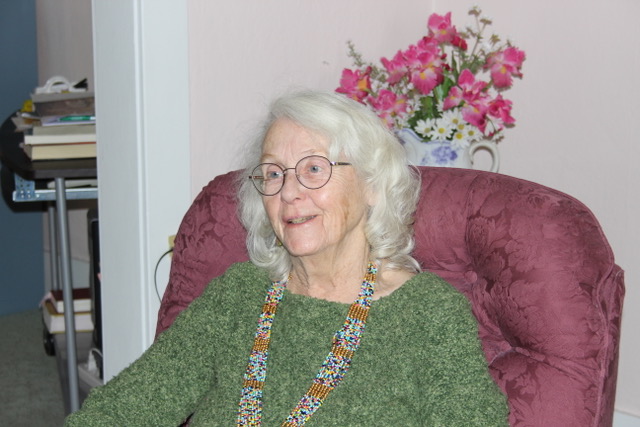


.jpg)
The Donald Vining Diaries – A Fifty Year Chronicle of a Gay Man’s Life
June is Pride Month, an opportune time to highlight the unique diaries of Donald Vining.
Vining was a diarist from the very beginning. At the age of eight, he began documenting his day-to-day activities. He wrote one line, largely practical entries about playing with friends, shoveling snow, taking violin lessons, and getting a dog – and with the dog, the attendant chores. Vining’s diary entry on Wednesday, January 6, 1926, reads “Went to school and cleaned up six dog messes.”
Box 1, Donald Vining papers, American Heritage Center, University of Wyoming.
While Vining’s adolescent attempts at keeping a diary sometimes fizzled out as the months progressed, a Christmas gift of a diary in 1931 “led to another attempt at faithful diarizing”. By that time, his diary entries had grown longer and sometimes included references to world events, like the 1932 kidnapping of the Lindbergh baby, which, to Vining’s chagrin, interrupted his favorite regularly scheduled Sherlock Holmes radio program.
By 1933, Vining was dreaming big, musing “As actor, author, playwright, investor, I’ll make huge sums. Of course, love means a great deal to me but I’m afraid money will always come first if it is a choice between the two.” He so identified with being a diarist, that it sometimes gave him nightmares. He wrote, “had a very disturbing dream last night when I dreamed that I wrote my diary on the rug and on my shirt cuffs – then somebody cleaned the rug and washed my shirts and the printing disappeared. I was on the point of weeping at the thought of blank pages in my diary.”
On December 31, 1934, Vining wrote, “Sixteen and seventeen is a good early age at which to finish one’s first diary. I believe it is such a habit now and I shall never get out of it.” It was a prescient observation. By January 1, 1936, Vining had dropped out of college, where he had been studying drama. “Finances were complicated” he wrote, but he was still determined to keep up with his diary writing. His first resolution for the new year – “to keep a more literate diary.”
In May of 1936, Vining, still a teenager and inspired by a sermon on the topic of love, wrote, “I at once decided never to feel furtive in my love affairs hereafter. Perhaps my lust for those of my own sex is something to be ashamed of, perhaps not. But at any rate my love for them is not. It’s only to be regretted that everyone can’t love everyone else and no love should be considered as other than the finest thing in the world.” It was the beginning of Vining’s many observations on attraction, love, and sex that would pepper his diaries in the years to come.
Vining spent his early twenties attending Westchester University in Pennsylvania, working odd jobs and writing and putting on plays for an amateur theatrical society. Much to his delight, he was eventually accepted for graduate studies at Yale’s drama school, where he was “thrown into ecstasy by the beauty of some of the buildings and the aristocratic appearance of it all.” He harbored fantasies of having his own repertory theatre and was eager to learn “a stage hand’s duties as well as an actor’s, director’s and author’s.” Those weren’t the only fantasies on his mind. On September 26, 1939, he wrote “Am I smitten now! As I came out from Drama 6 I saw him…His hair was wavy with just the slightest tint of red in its blondness. He has very prominent cheekbones and a long angular face. He looks intelligent and as tho he meant business. All this raving after only a glance or two…At last I have someone to pretend I’m in love with.” Dedicated to his diary as always, Vining wrapped up the year by writing, “No days of the year can be counted on to give me such joy as a diarist as do the first and last. I relish the summary.”
By 1941, Vining had graduated from Yale and submitted manuscripts to MGM and 20th Century Fox in Hollywood, but they were turned down. He wrote, “I rebound very quickly to professional setbacks and disappointments, which is either a very great asset or a quality that will lead me and my family smack onto the shoals. How long does one go on achieving nothing much. It always comes out all right in the biographies of successful authors, but what about the many you never hear about? When should one fight on, and when wise up to one’s own inadequacies and give up the attempt.”
Soon World War II was raging, and men of Vining’s age were being drafted. After some reflection, Vining submitted the necessary paperwork to be classified as a conscientious objector but still was required to go through the Army’s induction process. It was there that he was declared unfit for service by a psychiatrist who wrote “homosexualism-overt” on his papers. Vining was relieved to be rejected by the Army and resolved to move to New York City, saying “I know that I must take my talent, education and experience to market before it gets rusty.” In New York, he found some success writing plays and synopses of scripts and reviewing books. He felt compelled to write, saying “I have to have my freedom to write just as much, almost, as I have to have water, food, and sleep.” Vining wrote, “Being in New York is wonderful, high cost of living and amorous misadventures not-withstanding. Much of what I came for has not developed or has lost its appeal, but music and theatre are swell.”
By 1945, Vining was working as a clerk at the Sloan House YMCA. During the war it housed more than a thousand men, many of them enlisted, and was the biggest YMCA in the nation. Vining wrote about practicing his swimming in the Y’s basement swimming pool and keeping an eye out for attractive gay men there and in New York City’s Central Park West, a popular “cruising” spot.
While Vining still harbored an interest in playwriting, by 1949 he had taken a job in the Development Office at the Teacher’s College of Columbia University. Much of his diary in the 1940s, 50s and 60s documented the minutiae of everyday life – searching for an apartment, caring for his cats, and airing work grievances. His diary revealed that he enjoyed knitting and needlepoint and played mahjong and bridge. He maintained a busy social life and capitalized on the benefits of living in New York City. Visits to museums were frequent and he was a regular movie goer. He enjoyed opera, symphony, ballet and theater performances, often recording his impressions in his diary.
Vining eventually settled into a long-term relationship with Richmond Purinton. As the year was drawing to a close in 1956, Vining, then 39, wrote, “As I look around me, I seem to have all I ever wanted even if perhaps not so much of any one thing as I used to envision. I have a companion I love who fills my days and years with a nice balance or surprise, whimsy, thoughtfulness, and dependability. I have books, a bank account that permits travel, a job I don’t resist rising to in the morning, small but pleasant rewards from writing and painting, and I have New York.”
Vining long admired Samuel Pepys, who was known for his mid-17th century diary. Pepys’ diary is remembered today for its insight into upper-class life in London. It seems that Vining saw himself as a sort of gay New York City Pepys. By 1959 he had agreed to give his diary to Yale. He wrote “So now I don’t have to worry about offering it elsewhere and have only to pack it and send it off…Then I can stop worrying about fire, etc.” Vining spent his evenings transcribing his diary, writing “I must say that as I do the transcription I become convinced that with the chaff threshed away mine is a very good diary on the whole, ranging from poor in the Tech years to superb in the years where actual quotes characterize people very well. I am committed now to the dream that it will be published eventually but this is a little difficult to guarantee for its great value lies in its utter frankness.”
The American Heritage Center’s copy of Vining’s diary is largely typewritten transcripts, but when Vining was traveling, he resorted to writing in longhand.
He was widely traveled, often spending up to a month at a time abroad, frequently in Europe. While away from home he was exceptionally observant, making note of cultural differences, architecture, museum artefacts and more.
While Vining and Purinton were a couple for decades, their relationship was not strictly exclusive, and Vining wrote of his trips to the gay bath houses of New York City. His March 1982 diary notes, “we went home and had supper. Afterward I set out for Everard. During my first five minutes in the steam room and elsewhere I saw 6 handsome bodies that showed Everard is still the place. Beauty thinned out after that but still I had one of my better nights.”
Eventually, after failing to find a publisher for his diary, Vining founded Pepys Press and published a five-volume series simply titled A Gay Diary. The dedication page read, “To THE UNABASHED Those thousands of gay men and lesbians who didn’t wait for the Stonewall Rebellion and Gay Liberation to live full and loving gay lives without undue regard for what family, church, psychiatrists or state thought about it. My true kin.”
Vining had been a diarist for more than 50 years and had produced thousands of pages of single-spaced typewritten diary entries. He said he made “no attempt to touch up the self-portrait by removing warts nor to make improvements in the quality of the writing, often poor due to haste, fatigue, and, I’m afraid, blind spots in my mastery of capitalization, punctuation, and grammar … On the one hand I should have loved to amplify, explain, retract, or rephrase a thousand passages but on the other hand I felt it unfair to cosmeticize, patronize or apologize for my younger self.” Reviewers at the time praised his published work as “unquestionably the richest historical document of gay male life in the United States”.
Vining’s diaries capture his evolution from precociously observant boy to gay senior citizen. His last published diary entry, written on December 31st, 1982, begins “As an interim piece of writing I decided to work on the little 500 word essay for SAGE’s contest on MY LIFE AS A LESBIAN OR GAY: THEN AND NOW. I fussed and fussed with it long after working hours and way out of proportion to the rewards offered.” He concluded “Since this entry rounds out fifty years of diary, it makes a very natural place to stop. For now, at least.” Vining passed away in New York City on January 24th, 1998, at the age of 80 and is buried alongside Richmond Purinton in Maine.
The Donald Vining papers at the American Heritage Center consist of five boxes of diary transcripts and a published copy of A Gay Diary 1975-1982. There are edited and original diaries from the the years 1926 through 1982. The New York Public Library also houses Vining’s correspondence, diaries, novels, play scripts, stories, articles, scrapbook, two videotaped interviews, two of his original childhood diaries (1926-1927), and typescripts of his diaries, 1926-1970, illustrated with photographs, that Vining called his “Diary Digests.”
To see how Vining’s personal experiences reflected broader societal attitudes, explore our Virmuze exhibit “A Different Kind of Spotlight: How the media has portrayed queerness throughout the decades.” While Vining documented his private gay life with remarkable candor from the 1930s through the 1980s, this exhibit reveals how mainstream media was simultaneously covering LGBTQ+ issues—often with far less understanding or compassion. The contrast between Vining’s authentic self-portrayal and the media’s evolving representation offers fascinating insight into the gap between lived experience and public discourse during those transformative decades.
Post contributed by AHC Writer Kathryn Billington.
#alwaysarchiving